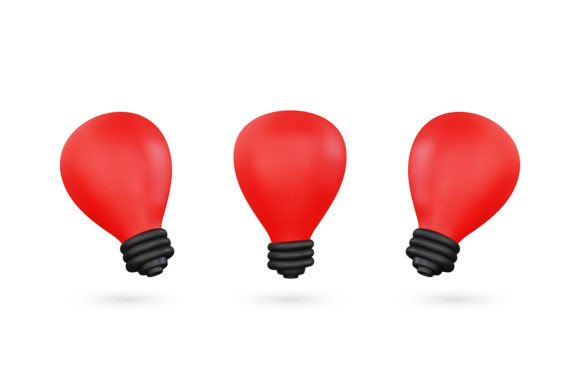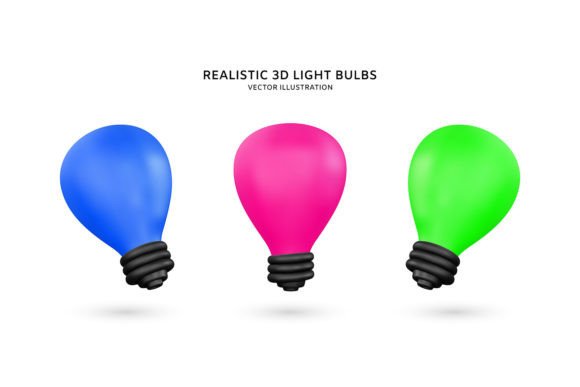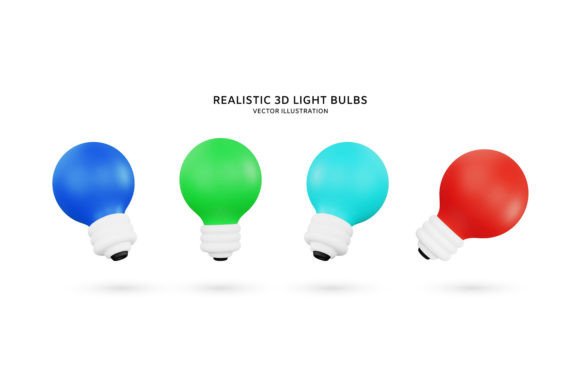
Evaluating Realistic 3D Colorful Light Bulbs for Design Projects
In the realm of digital graphic design, visual metaphors play a crucial role in communicating ideas quickly and effectively. Among the most enduring symbols is the light bulb, universally recognized as a representation of innovation, creativity, and bright ideas. However, standard two-dimensional icons often lack the depth and visual interest required for modern marketing materials, presentations, and web interfaces. This is where Realistic 3D Colorful Light Bulbs come into play. These assets offer a sophisticated alternative to flat design, providing designers with high-fidelity illustrations that capture attention through lighting, texture, and dimensionality.
When considering the acquisition of such digital assets, it is essential to understand not just the aesthetic appeal but also the technical specifications and practical applications. A typical package for these illustrations includes one EPS 10 file and one JPG file. Understanding the distinction between these formats and how they serve different stages of the design workflow is critical for making an informed purchasing decision. This article explores the features, benefits, and considerations associated with using realistic 3D colorful light bulb vectors, helping you determine if they align with your specific project requirements.
Understanding the Asset Composition
The core value proposition of Realistic 3D Colorful Light Bulbs lies in their hybrid delivery format. Buyers typically receive two distinct file types: a vector file (EPS 10) and a raster image (JPG). Each serves a unique purpose in the design ecosystem.
The EPS 10 file is the primary asset for professional designers. As a vector format, it uses mathematical equations to define shapes, lines, and colors rather than pixels. This means the illustration is resolution-independent. You can scale the light bulb from the size of a favicon to the dimensions of a billboard without any loss in quality or sharpness. The "100 Vector File" designation often implies that the artwork is constructed entirely from vector paths, ensuring clean edges and smooth gradients. Furthermore, because the elements are separated, designers can manipulate individual components. If you need to change the color of the glass, adjust the filament brightness, or remove specific highlights, you can do so using vector editing software such as Adobe Illustrator or Corel Draw.
The accompanying JPG file serves as a convenient preview or a quick-use asset for non-editable contexts. It is ideal for immediate insertion into documents, slide decks, or web content where no further modification is required. While the JPG is high-quality, it is fixed in resolution. Therefore, it should be used primarily for reference or final output in scenarios where scaling is not a factor.
Benefits of High-Quality Vector Illustrations
Opting for high-quality vector illustrations over stock photography or basic clip art offers several tangible benefits. First, the scalability cannot be overstated. In responsive web design and multi-platform marketing campaigns, assets must perform well across various screen sizes and print dimensions. A vector-based light bulb ensures consistency whether viewed on a smartphone or printed on large-format signage.
Second, the customizability of these files allows for brand alignment. Marketing materials often require strict adherence to brand color palettes. With a separate element structure, you can easily recolor the glass housing or the base of the bulb to match corporate identity guidelines. This level of control is impossible with flattened raster images or photographs.
Third, the realistic 3D aesthetic adds a layer of professionalism and depth. Unlike flat icons, which can sometimes appear generic, 3D rendered vectors simulate light reflection, refraction, and shadow. This creates a tactile feel that can make digital interfaces more engaging and help key concepts stand out in crowded visual environments.
Practical Applications and Use Cases
Identifying the right situations to use Realistic 3D Colorful Light Bulbs helps maximize their utility. These assets are particularly strong fits for:
- Presentation Decks: Enhancing pitch decks or educational slides where visual metaphors for ideas and solutions are needed.
- Web Design: Serving as hero images or section headers for technology startups, creative agencies, or innovation consultancies.
- Print Marketing: Creating brochures, flyers, or posters where high-resolution scalability is mandatory for crisp printing.
- Social Media Graphics: Designing eye-catching posts that require vibrant colors and depth to stop users from scrolling.
In these contexts, the ability to edit and scale the asset ensures that the visual remains relevant and integrated seamlessly into the overall design language.
Considerations and Tradeoffs
While vector illustrations offer significant advantages, there are tradeoffs to consider. The primary consideration is the learning curve. To fully leverage the EPS 10 file, you must have access to and proficiency with vector editing software like Adobe Illustrator or Corel Draw. If you are unfamiliar with path manipulation, gradient meshes, or layer management, the editable nature of the file may present a barrier. In such cases, the JPG file becomes the primary usable asset, limiting your ability to customize.
Another consideration is file complexity. High-quality 3D vectors can contain thousands of anchor points and complex gradient meshes. This can sometimes lead to larger file sizes compared to simple flat icons, potentially impacting load times if not optimized correctly for web use. Designers should be prepared to simplify paths or export optimized SVGs if web performance is a critical metric.
Additionally, while the 3D effect is realistic, it is still an illustration. For projects requiring photorealism based on actual physical products, a high-resolution photograph might be more appropriate. However, for conceptual work, the stylized realism of these vectors often communicates more clearly than a literal photograph.
Making the Decision
To determine if Realistic 3D Colorful Light Bulbs are the right choice for your needs, evaluate your current workflow and project goals. If you require assets that are flexible, scalable, and customizable, and if you have the technical skills to edit vector files, this package offers excellent value. The inclusion of both EPS and JPG formats provides a safety net, allowing for both deep customization and quick deployment.
However, if your project demands immediate use without editing, or if you lack vector editing tools, you may find the EPS file underutilized. In such scenarios, ensure that the provided JPG resolution meets your output requirements. Alternatively, consider simpler flat icon sets if your design language prioritizes minimalism over depth.
Ultimately, these illustrations represent a versatile tool for modern designers. By combining the precision of vector graphics with the visual appeal of 3D rendering, they bridge the gap between technical functionality and aesthetic impact. Whether you are refreshing a brand identity or illustrating a complex concept, understanding the capabilities and limitations of these files will help you integrate them effectively into your creative process.